NFL agent cap 3%NBA agent cap 4%MLB agent fee (no union cap) usually 4 to 5%Top federal rate 2026 37%Bonus withholding over $1M 37%Texas state tax on wages 0%Florida state tax on wages 0%California top rate 13.3%NBA escrow 10% of each check held backNIL money 1099 income, add 15.3% self-employment taxAgent fees for team salary not deductible on your federal returnNFL players file taxes in about 10 to 14 states a year

A Lakers contract. One season. Los Angeles.

$30,000,000

That is the number on TV. Watch where it goes.

Scroll

Watch · 95 seconds

See the tools. Real numbers, line by line.

Pro contracts, NIL, two offers, practice squad and G League pay, and playing overseas, all recorded on the real calculators. Sound on.

Read the transcript

$30 million. That's the number on TV. What does a player actually keep? KeepMyCheck is a free calculator that shows it.

Start with the pro calculator, for the NFL, NBA, WNBA, MLB, NHL, and MLS. Pick the team, put in the salary. Here, $30 million with the Lakers.

Federal tax. Medicare. California tax. The jock tax for road games. The agent and advisors. He keeps $12.6 million. 42 percent.

Now change where he lives. Texas, and he keeps $13.4 million. 45 percent. Where you live is part of the math.

Playing college ball? The NIL calculator shows what to set aside, because nobody takes tax out of NIL money. On $50,000 in deals, you keep $31,694. 63 percent.

Got two offers? Put them side by side. $10 million a year in Miami keeps more than $11 million in New York, about $1.7 million more over four years. New York would need about $11.9 million to match.

Not a star? The practice squad tool starts at $13,750 a week. 18 weeks in Texas keeps about $174,000 after tax. None of it is guaranteed.

The same page covers cut players and the G League. A standard G League deal keeps $37,568.

Playing overseas? On a $1.5 million net contract in China, the club pays $1 million in tax, and the IRS counts $2.5 million as your income. After a 10 percent agent, you keep $1,350,000.

It's free, in English and Spanish. Run your own numbers at KeepMyCheck.com. Estimates for education, not tax advice.

01

Federal income tax

Uncle Sam takes the first bite, and it is the biggest.

($10,931,880)

Everything over $640,600 is taxed at 37%. On a $30 million season, almost all of it is in that top bracket. This one line is bigger than every other cost combined.

02

Medicare and Social Security

The payroll taxes nobody talks about.

($714,639)

Social Security stops after $184,500. Medicare never stops: 1.45% on every dollar, plus 0.9% more on everything over $200,000.

03

California state tax

Where you live decides this line.

($3,624,565)

California's top rate is 13.3%. The same contract in Miami or Dallas would put this money back in his pocket, because Florida and Texas do not tax wages at all.

04

The jock tax

Every road trip sends a bill.

($566,412)

41 road games means paying income tax in almost every state he visits, plus Canada in Toronto. Many players file 10 to 20 state returns a year.

ArizonaColoradoDistrict of ColumbiaGeorgiaIllinoisIndianaLouisianaMassachusettsMichiganMinnesotaNew YorkNorth CarolinaOhioOklahomaOregonPennsylvaniaUtahWisconsinOntario, Canada

05

The agent

Four percent, off the top, before taxes.

($1,200,000)

The NBA caps agents at 4%. It comes out of the gross, and for team salary it is not deductible on a federal return. Many agents will take less. Ask.

06

Managers, CPA and lawyer

Good people. Still a cost.

($325,000)

A 1% advisor fee and the cost of filing all those state returns. Stack a few more percentage fees and this line doubles without anyone noticing.

The real number

$12,637,504. 42% of the headline.

And that is before a house, a car, or helping anyone. Before NBA escrow holds back another 10% of every check. Before the career ends, which for most players comes sooner than they plan for.

KeepMyCheckPrivate

$30M contract. What he keeps.

$12,637,504

Los Angeles, CA2026

If you keep it

The number on TV buys a moment. What you keep buys a life.

None of this needs the whole contract. It needs a plan made before the first check lands, with people you checked out first.

Year oneMom's keys
Every SundayEverybody eats
HomeA place you own
Paid in cashOne car, no note
Year tenStill here

Watch, then share

Where the money goes. How the rich keep it.

First, watch a $30 million contract shrink to what a player really keeps. Then the seven legal moves wealthy families use to cut taxes and keep money in the family. Share them with the player in your family, the teammate who just signed, or the parent who keeps hearing the big number. Sound on.

Read the full playbook
90 secondsWatch $30 million disappear
2 minutesPlay it like the rich

The life

It is all real.If you keep it.

The house for Mom. The plane seat. The business back home. The Sunday table with everybody at it. None of it comes from the number on TV. It comes from the $12,637,504 you actually keep, and what you do with it in the first two years.

  • Buy it oncePay cash for the few things that matter. Payments are how a contract gets eaten.
  • Own, then enjoyPut the base in things that pay you back before the things that only cost you.
  • Make it lastThe career is short. The life is long. Plan the money for the long one.
A mother straightening her son's tie backstage on draft night
draft night. Mom fixed the tie.
Family and friends laughing at a backyard cookout
the whole block came
A young athlete and his mother meeting a financial advisor in a high-rise office
a team you checked
A young athlete reading his contract line by line with an attorney
read every page
A young man cutting the ribbon on his own new business as family and neighbors cheer
the shop back home

Free download

The Rookie Money Checklist

25 moves for the first contract, the first NIL deal, and the family around it. Four pages. Print it, put it on the fridge.

I am a

No spam, no selling your email, unsubscribe anytime. Your calculator numbers are never sent.

A young man handing his mother the keys to her new house

Before you sign

The contract is the headline.What you keep is the legacy.

Sit down with the people you trust, run the real numbers together, and decide what this money is for before anyone else decides for you.

Bring your family in

The library

Learn it before you sign it

All 20 guides

Case files

Real players. Real money. Real lessons.

Cautionary

Antoine Walker (NBA)

Earned about $110M, filed bankruptcy in 2010

The three-time All-Star filed Chapter 7 in 2010 listing about $12.7M in liabilities and $4.3M in assets after failed real estate ventures, heavy spending, gambling and supporting a large circle. He sold his 2006 championship ring. He was discharged in 2012 and now speaks to young players about money.

Source, 2010

Cautionary

Warren Sapp (NFL)

Hall of Famer filed Chapter 7 owing more than $6.7M

Sapp filed in Fort Lauderdale on March 30 2012, owing over $6.7M including back child support and alimony. He had banked about $60M in his career by his own count. Filings listed 240 pairs of Jordan sneakers among his assets.

Source, 2012

Fraud

Jake Peavy, Mark Sanchez, Roy Oswalt and others

SEC: trusted adviser moved $33M+ of athletes' money without consent

The SEC charged adviser Ash Narayan in May 2016 with transferring more than $33M from clients' accounts, mostly pro athletes, into a struggling ticket company where he sat on the board, often using forged or unauthorized signatures. He received nearly $2M in hidden compensation. He was later barred from the securities industry. Lesson: separate custody from advice and read your own statements.

Source, 2016

Fraud

Shohei Ohtani (MLB)

Interpreter stole nearly $17M from his bank account

Ippei Mizuhara wired nearly $17M from Ohtani's account to an illegal bookmaker's associates in 40+ wires from Nov 2021 to March 2024 without permission. He pleaded guilty to bank fraud and filing a false tax return and in Feb 2025 was sentenced to 57 months, with about $17M restitution to Ohtani and $1.1M to the IRS. Lesson: nobody but you should have unmonitored access to your accounts.

Source, 2025

Smart structure

Bobby Bonilla (MLB)

$1,193,248.20 every July 1 from 2011 through 2035

In 2000 the Mets owed Bonilla $5.9M to release him. Instead of paying it then, they agreed to 25 annual payments starting in 2011 with 8% interest built in, totaling nearly $30M. Deferral can pay you well if the payer is solvent and the interest rate is real.

Source, 2026

Smart structure

Shohei Ohtani (MLB)

$680M of a $700M deal deferred, no interest

Ohtani's 10-year Dodgers deal (Dec 2023) pays $2M a year during the contract, then $68M every July 1 from 2034 to 2043, without interest. Because the money is received later, California may only tax a small part while he plays, and if he lives in a no-tax state when the deferred payments arrive, the state bill could shrink sharply. Whether federal law (4 U.S.C. 114) fully shields those payments from California is debated.

Source, 2023
A father and son going over numbers on a phone in the bleachers
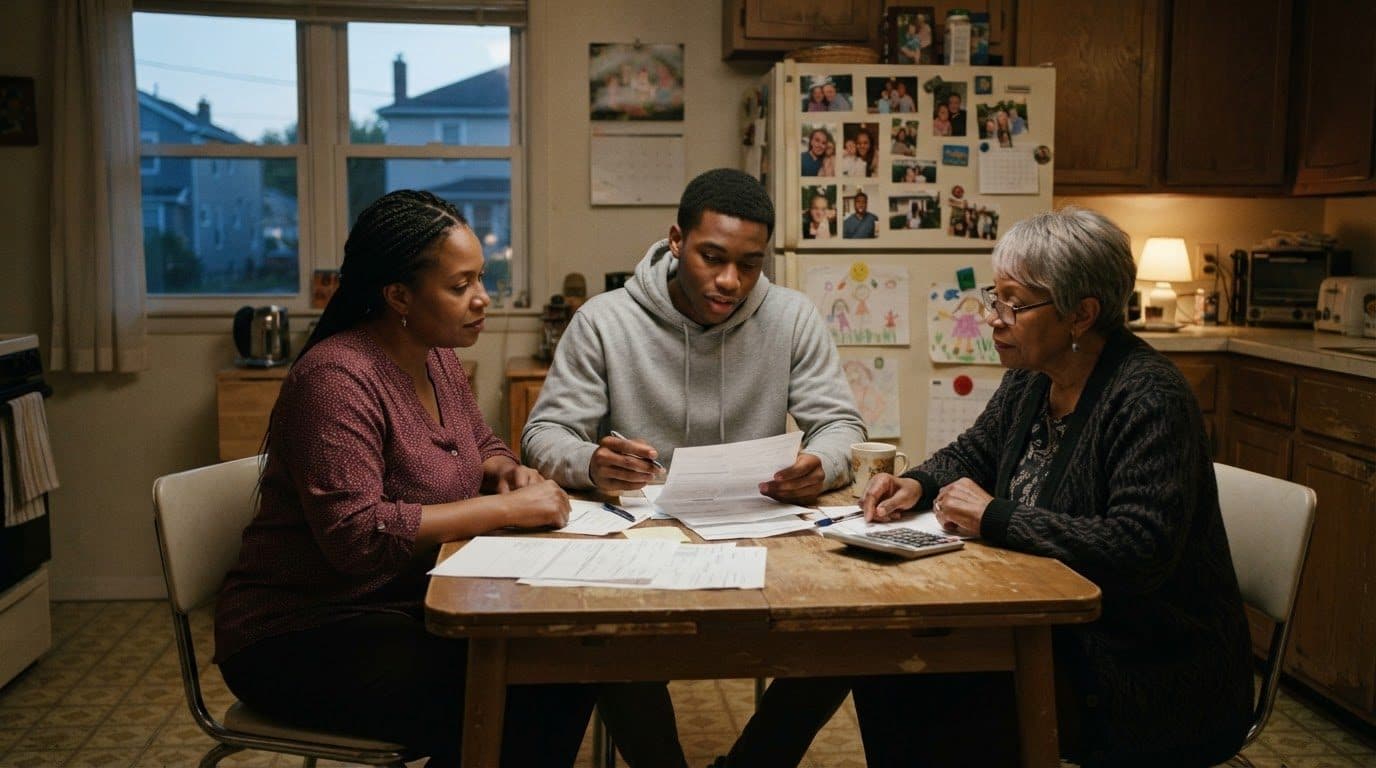
A college athlete and her parents reading an NIL deal at the kitchen table
read it together

Moms, dads, grandparents, guardians

You are the first line of defense

When the offers start, the people around your athlete multiply. Some are good. Some are there for a cut. The parent guide covers the questions to ask an agent, how to read an NIL contract before a minor signs it, and how to be the person who can say no.

Read the parent guide

Common questions

What is KeepMyCheck?+

KeepMyCheck is a free education site that shows athletes the number that lands in the bank, not the number on TV. Its tools cover pro contracts in six leagues, NIL deals, free agency offers, practice squad and G League pay, and playing overseas. It is written in plain English, and in Spanish.

Is KeepMyCheck free, and does my information leave my phone?+

It is free, with no sign-up to use any tool. Every calculator runs inside your own browser, so your contract numbers never leave your device, and offers you save in My Offers stay on your own phone.

How much of a pro contract does a player actually keep?+

Usually somewhere between about 40% and 60% of the headline number, before any spending. The biggest factors are the 37% top federal rate, where your team plays, where you legally live, the jock tax on road games, and the percentage fees (agent, business manager, advisor) that come off the gross.

What is the jock tax?+

Most states with an income tax charge visiting athletes tax on the pay they earn while working in that state. It is usually figured by duty days: the days you are in that state for games, practice, and team travel, divided by all the duty days in your season. That is why players file returns in many states each year.

Do I have to pay taxes on NIL money?+

Yes. Money from NIL deals is income, and for most third-party deals you are treated as self-employed. That means federal income tax, state income tax in most states, and 15.3% self-employment tax (Social Security and Medicare) on most of your profit. Nobody takes it out for you, so you have to set it aside.

How do I check if a sports agent is legit?+

Look them up on the players association's official agent list for your sport (the NFLPA and NBPA have public searches), and on your state's athlete agent registry if your state has one. If they are not on the list, they cannot legally negotiate a pro contract for you in that league.

Is KeepMyCheck tax or legal advice?+

No. KeepMyCheck is a free education site, and its calculators give estimates based on published 2026 federal and state tax rules, league rules and the inputs you choose. They are not a tax return, and nothing there is tax, legal, or investment advice. Before you sign a contract or hire an agent, talk to a licensed CPA, an attorney licensed in your state, and a fee-only fiduciary financial advisor.